
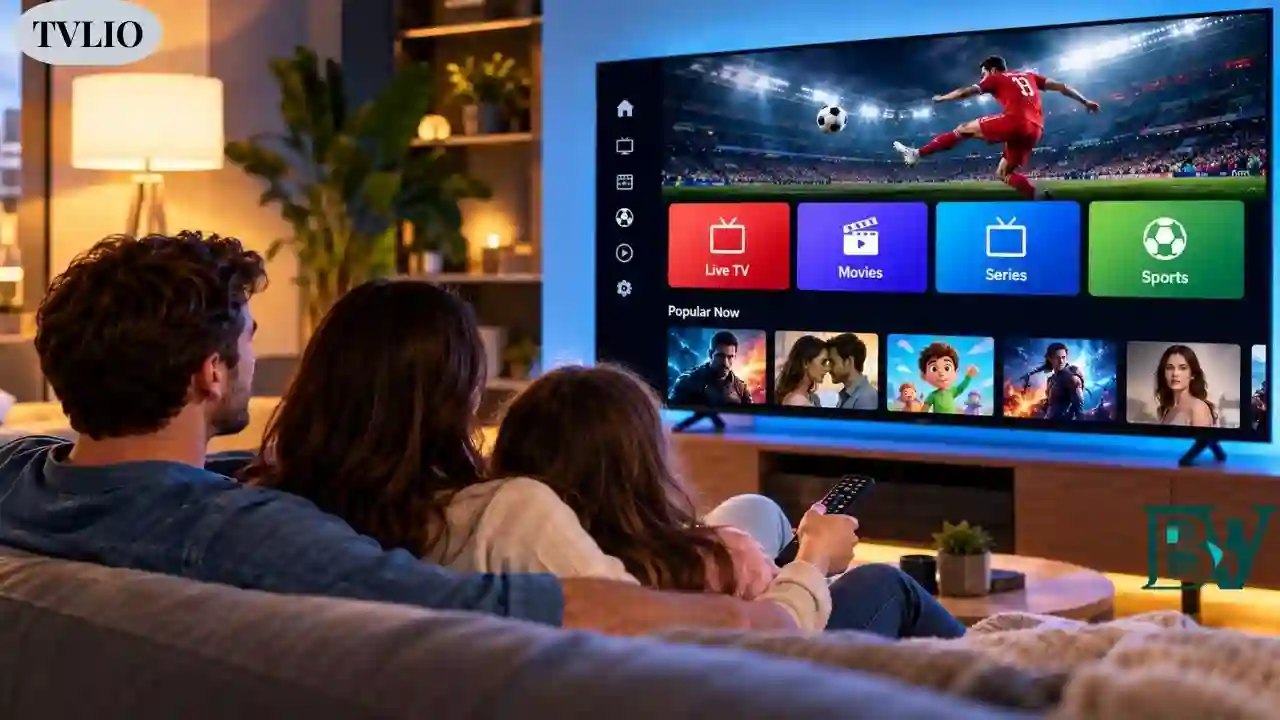
TVLIO: What It Is, How It Works, Features, Safety & IPTV Guide
Searching for tvlio usually means you want to know what the service is, how it works, what devices it supports, and whether it is worth paying for. Based on current online references, TVLIO is commonly associated with IPTV and internet-based streaming, including live television, sports, movies, and series. However, the name is used across more than one website and some advertised specifications differ significantly, so shoppers should verify the exact provider before purchasing.
That distinction matters. An IPTV provider is not necessarily the same thing as an IPTV player, and a large channel count alone does not tell you whether a service is reliable, legal in your location, secure, or actually capable of delivering the experience promised in an advertisement.
This guide explains what TVLIO appears to be, how IPTV services like it work, what to look for before subscribing, how device setup typically works, and which warning signs should make you cautious.
What Is TVLIO?
TVLIO is a name associated online with IPTV streaming services. IPTV, or Internet Protocol Television, delivers television programming through an internet connection rather than through a traditional terrestrial, satellite, or cable television signal.
Some websites currently presenting themselves as TVLIO promote packages that include live channels, sports, movies, television series, video on demand, electronic program guides, catch-up functions, and support for multiple devices. One current TVLIO-branded site, for example, advertises tens of thousands of live channels and a large VOD catalog, while other sources describe materially different catalog sizes. These figures should therefore be treated as provider claims rather than independently verified industry measurements.
The most useful way to think about TVLIO is not simply as “another streaming app.” In many cases, the provider supplies access credentials or a playlist, while a compatible IPTV application does the actual work of displaying the channels and on-demand content.
TVLIO and IPTV: What Is the Difference?
The terms IPTV service and IPTV player are often mixed together, but they describe different parts of the streaming process.
| Component | What it does |
|---|---|
| IPTV provider | Supplies access to channels, streams, or VOD content |
| IPTV player | App used to load and watch that content |
| Internet connection | Carries the video stream to your device |
| Streaming device | Smart TV, phone, computer, Fire TV, Android box, or similar hardware |
A provider may tell customers to use an app such as an IPTV player and then enter an M3U playlist, Xtream-style credentials, a portal URL, or another form of login information. Current TVLIO-related setup pages mention several such methods, including Smart TVs, Android devices, Fire TV, MAG hardware, Formuler devices, phones, Windows, and macOS.
This separation is important when troubleshooting. If an IPTV player opens correctly but channels do not load, the problem may be with the subscription, server, credentials, or source rather than the player application itself.
How TVLIO Works
The basic process behind an IPTV subscription is straightforward.
You first purchase or activate a subscription from a provider. The provider may then supply login credentials, an M3U playlist, a portal address, or another method of connecting your IPTV application to its streaming servers.
You then install a compatible IPTV player on your chosen device. After entering the supplied connection information, the player retrieves the available channel list, program information, and VOD catalog.
When you select a channel or movie, the content is delivered over the internet to your device rather than coming through a conventional cable box or satellite receiver.
A Simple TVLIO Streaming Flow
Subscription → Login or playlist → IPTV player → Internet connection → Live TV/VOD playback
The quality of the final experience can depend on every part of that chain.
A fast internet connection cannot automatically fix overloaded provider servers, just as a reliable provider cannot compensate for an unstable home network.
What Features Are Associated With TVLIO?
Features vary by provider and package, but current TVLIO-related websites commonly emphasize several capabilities.
Live TV
Live television is the core attraction of IPTV services. Providers may organize channels by country, language, genre, or category.
TVLIO-related promotional material claims broad international coverage, including local television, sports, entertainment, and channels from different regions. However, users should check whether the specific channels they care about are actually available rather than relying only on an overall channel count.
Movies and Series
TVLIO is also promoted in connection with video on demand, allowing users to select movies or television series rather than watching only scheduled broadcasts. Some current marketing pages advertise very large libraries, but catalog sizes can change and may differ between providers using the TVLIO name.
Sports Streaming
Sports are a major reason people search for IPTV services.
Current TVLIO promotional material specifically highlights live sports and catch-up functionality. For sports viewers, however, reliability matters more than a headline number: missing a live match because of buffering is far more frustrating than having thousands of irrelevant channels.
Catch-Up TV
Some TVLIO-related services advertise catch-up viewing, which allows users to watch recently broadcast programming rather than relying entirely on live playback.
Availability can be channel-dependent, and the advertised catch-up period may vary. One current TVLIO site states that catch-up can extend up to seven days on supported channels.
Electronic Program Guide
An EPG, or electronic program guide, presents schedules in a format similar to a traditional television guide.
This can make IPTV considerably easier to navigate because users can see what is currently playing and what is scheduled next instead of opening channels one at a time.
Multi-Device Access
TVLIO-related sources mention support across several device categories, including Smart TVs, Android devices, Fire TV, iOS, computers, MAG boxes, and Formuler hardware. Exact compatibility depends on the specific provider and application being used.
TVLIO Device Compatibility
One of the first things to check before subscribing is whether the service works with your exact device.
| Device | What to verify |
|---|---|
| Smart TV | Compatible IPTV player and operating system |
| Fire TV / Firestick | Installation method and supported player |
| Android TV | App availability and login format |
| iPhone/iPad | Supported iOS player and credentials |
| Windows PC | Compatible desktop player |
| Mac | macOS app or supported player |
| MAG box | Portal URL and device activation procedure |
| Formuler | Supported player and portal configuration |
A current TVLIO installation guide describes different setup procedures for Fire TV, Smart TV/Android TV, MAG, Android, iPhone, Windows, Mac, and Formuler devices.
That does not mean every TVLIO-branded seller supports every device in exactly the same way. Always compare the provider’s current setup instructions with your hardware before paying.
How to Set Up TVLIO
The exact installation process depends on the provider and device, but the general workflow is usually similar.
Step 1: Check Your Device
Confirm the model, operating system, and app store available on your television, streaming stick, or computer.
This prevents a common problem: paying for a subscription before discovering that the intended player cannot be installed on your device.
Step 2: Confirm the Login Method
Ask the provider what connection method you will receive.
Common formats mentioned by TVLIO-related setup pages include:
- M3U playlist
- Xtream-style username and password
- Portal URL
- Device-based activation
- Provider-specific account credentials
Step 3: Install the Required Player
Some IPTV providers do not provide a dedicated viewing application. Instead, they instruct customers to install a compatible third-party IPTV player.
That distinction should be made clear before purchase.
Step 4: Add Your Provider Details
Enter the connection information supplied by the provider into the IPTV player.
Do not share your IPTV credentials publicly or enter them into an unfamiliar website simply because it claims to offer activation assistance.
Step 5: Test Before Relying on the Service
Open several different channels, test VOD playback, check the EPG, and try the service during the hours you normally watch television.
Testing is more useful than judging an IPTV service from its homepage.
Is TVLIO Safe?
There is no responsible basis for giving every service operating under the TVLIO name a blanket “safe” or “unsafe” rating.
The bigger issue is that TVLIO-related websites and descriptions are not completely consistent. Some pages make large claims about channel libraries and streaming quality, while other references emphasize that independent verification is limited.
A website having HTTPS or an active SSL certificate does not automatically prove that a television service is reputable. Security and legitimacy are separate questions.
Before entering payment information, consider the following:
Check the domain carefully. Make sure you are dealing with the exact website you intended to visit.
Look for transparent business information. A clear company identity, contact method, refund policy, and privacy policy are stronger signals than promotional slogans alone.
Review the payment process. Avoid handing card information to an unfamiliar payment page without understanding who operates it.
Protect your credentials. Never publish usernames, passwords, device IDs, or IPTV playlist URLs publicly.
Research the rights situation. A service advertising access to large numbers of premium channels should be evaluated for whether it has the necessary distribution rights in your country.
Is TVLIO Legal?
The word IPTV does not itself mean illegal.
IPTV is simply a method of delivering television over the internet. Legitimate broadcasters, telecom companies, and streaming platforms all use internet-based television technology.
The legal question is whether a particular provider has the necessary rights to distribute the content it offers.
That means consumers should not assume that a provider is legitimate simply because it uses a professional website, offers a modern application, or advertises thousands of channels.
Before subscribing, check the provider’s terms, business identity, licensing information where applicable, and the laws that apply in your country.
TVLIO Pros and Cons
No IPTV service should be evaluated only on its advertised channel count.
Potential Advantages
Large content selection: TVLIO-related services are marketed around broad collections of live television, sports, movies, and series.
Flexible device support: Current setup information references several device categories, which may appeal to households that use multiple screens.
Internet-based access: IPTV can remove the need for a traditional cable or satellite delivery method.
On-demand viewing: VOD libraries can make it easier to watch content on your own schedule.
Potentially useful catch-up features: Where supported, catch-up can help when you miss a live broadcast.
Potential Disadvantages
Inconsistent information: Different TVLIO-related websites advertise different channel and VOD numbers, making independent verification important.
Variable reliability: IPTV quality depends on both the provider’s infrastructure and the user’s internet connection.
Legal uncertainty: The legality of individual channels or services depends on distribution rights and jurisdiction.
Third-party players: Some setups require external IPTV applications, creating an additional layer between the customer and the provider.
Changing availability: Channels can disappear, URLs can change, and apps may stop working.
What Should You Check Before Buying TVLIO?
A smarter purchase decision starts with practical questions rather than marketing numbers.
1. Can You Name the Channels You Actually Need?
Instead of asking whether a service has “thousands of channels,” identify the specific networks, sports leagues, news channels, languages, or regional stations you want.
A service with 5,000 channels is useless to you if the 10 channels you care about are missing.
2. Is There a Refund Policy?
A clear refund policy gives you a way to respond if the service does not work as expected.
Read the conditions rather than assuming that phrases such as “money-back guarantee” mean every purchase qualifies automatically.
3. What Happens When Streams Fail?
Look for information about customer support.
Can the provider explain technical problems? Is there a real contact method? Does support respond consistently?
Those questions are often more revealing than a polished sales page.
4. Does the Service Support Your Location?
A channel lineup that looks excellent in one country may be much less useful in another.
Regional restrictions, local channels, language availability, and sports rights can all affect the practical value of an IPTV subscription.
5. Does It Require Unusual Installation Steps?
Be careful when a service requires you to disable important security controls, install unknown files, or enter account credentials into unfamiliar software.
A normal IPTV setup should not require you to compromise basic device security.
How to Improve IPTV Streaming Quality
Even a good provider can struggle on an unstable network.
Start by checking your internet connection on the device that will actually be used for streaming. The speed measured on a phone in another room does not necessarily represent the connection available to a television connected through Wi-Fi.
Wired Ethernet is often worth considering for a stationary television or streaming box because it can reduce wireless interference.
You can also improve consistency by limiting heavy downloads, cloud backups, and other high-bandwidth activity while watching live television.
If every channel buffers at the same time, investigate the network and provider connection. If only one channel repeatedly fails while others work normally, the problem may be specific to that stream.
TVLIO Buffering: Common Causes
Buffering is not automatically evidence that the provider is bad.
Possible causes include:
Weak Wi-Fi: The television may be receiving a poor wireless signal.
Network congestion: Other devices may be consuming substantial bandwidth.
Provider-side overload: The streaming server may be struggling during a popular event.
Poorly configured player: Incorrect settings can sometimes affect playback.
Source-specific problems: One stream can fail while another remains perfectly stable.
The best troubleshooting approach is to change one variable at a time. Test another channel, another device, or another connection rather than changing every setting simultaneously.
TVLIO vs Traditional Cable and Streaming Apps
The choice is not simply between “TVLIO and cable.” Modern households may choose among cable, satellite, mainstream streaming services, free ad-supported television, and IPTV providers.
| Option | Main strength | Common limitation |
|---|---|---|
| Cable TV | Established support and local availability | Can be expensive and package-heavy |
| Satellite | Broad coverage in many areas | Hardware and weather considerations |
| Mainstream streaming | Strong apps and established content rights | Content split across many subscriptions |
| IPTV provider | Potentially broad live-TV selection | Provider quality and rights can vary |
| Free streaming | Low cost | Advertising and more limited catalogs |
The right option depends on what you watch, where you live, how important live sports are, and how much reliability matters to you.
Who Might Consider TVLIO?
TVLIO may appeal to viewers who prefer an internet-based television setup and want to explore live channels, sports, and VOD through a single IPTV subscription.
It can also be interesting to people who already understand IPTV players and are comfortable configuring a device themselves.
However, beginners should spend extra time checking the provider identity, installation method, refund terms, privacy practices, and content rights before paying.
Who Should Be More Cautious?
TVLIO may not be the best fit for someone who expects the same consumer protections and predictable experience associated with a large established television company.
Extra caution is also sensible when a seller:
- Avoids clearly identifying the business
- Makes extraordinary channel-count claims without supporting information
- Has no understandable refund policy
- Requires payment through unusual channels
- Provides little information about customer support
- Asks for unnecessary personal information
- Uses multiple confusing domains or brands
These issues do not automatically prove wrongdoing, but they are good reasons to slow down and investigate.
Common TVLIO Mistakes to Avoid
Buying Based Only on Channel Count
Large numbers look impressive, but they tell you little about reliability, regional relevance, picture quality, or legal distribution rights.
Installing Random APK Files
A file advertised as a “TVLIO app” is not automatically trustworthy.
Use official device stores where possible, and investigate the source of any file before installing it.
Sharing Your IPTV Credentials
Treat IPTV usernames, passwords, M3U URLs, and activation details like any other private account information.
Assuming 4K Means Every Channel Is 4K
Promotional references to 4K or 8K do not mean every available channel or VOD title is delivered at that resolution.
Actual video quality depends on the source stream, encoding, bandwidth, device, and display.
Ignoring the Refund Terms
Read the conditions before paying, especially when a provider advertises a short-term guarantee.
Frequently Asked Questions About TVLIO
What is TVLIO?
TVLIO is a term currently associated online with IPTV and internet-based streaming services. Current websites using the name promote live TV, sports, movies, series, and multi-device access, although specific offerings vary between providers.
Is TVLIO an IPTV service?
The name is commonly used in connection with IPTV services. However, multiple TVLIO-branded or TVLIO-related websites exist, so users should verify exactly which provider they are dealing with.
Does TVLIO work on Smart TVs?
TVLIO-related installation instructions mention Smart TVs and Android TV, although the exact player and setup process can vary. Some guides direct users to install a third-party IPTV player and then enter provider credentials.
Can TVLIO work on Firestick?
Current TVLIO installation material includes instructions for Fire TV devices. The exact installation method may change, so users should rely on the provider’s current instructions rather than old installation codes or unofficial tutorials.
Does TVLIO include sports?
Sports are prominently advertised by some current TVLIO IPTV pages, but the actual availability of a particular league or event should be checked before purchasing.
Does TVLIO offer movies and series?
Yes, TVLIO-related promotional pages describe VOD libraries containing movies and television series. The size and selection vary among sources and should not be assumed to be identical across all TVLIO websites.
Is TVLIO legal?
IPTV technology itself is legal. The legality of a specific IPTV provider depends on whether it has the necessary rights to distribute the content it offers and on the laws applicable in the user’s jurisdiction.
Is TVLIO safe to use?
Safety depends on the specific website, provider, application, payment method, and downloaded software. Because information associated with TVLIO is inconsistent across the web, users should verify the exact provider and avoid installing unknown software or sharing sensitive credentials unnecessarily.
Why does TVLIO buffer?
Buffering can result from weak Wi-Fi, network congestion, provider-side server load, a problematic stream, or player/device issues. Testing different channels and connections can help identify the source.
Is TVLIO better than Netflix or other streaming services?
They serve different purposes. TVLIO-related IPTV services focus more heavily on live television and broad channel access, while established on-demand platforms typically concentrate on their own licensed libraries and mature applications. The better choice depends on the content you actually watch.
Should I buy TVLIO?
Treat TVLIO as something to research rather than automatically recommend. Before paying, confirm the exact provider, channels you need, supported device, pricing, refund policy, payment method, customer support, privacy terms, and the provider’s right to distribute its advertised content.
Final Takeaway
The search term tvlio currently points most strongly toward IPTV and internet-based television, but it does not identify one universally standardized service with one fixed feature set. Current online sources describe different channel counts, catalogs, devices, brands, and installation approaches, so repeating the biggest promotional claims without qualification would give readers a misleading impression.
For consumers, the smartest approach is simple: verify the provider before you buy. Check exactly what you receive, how you will watch it, how support works, what happens if the service fails, and whether the provider has the necessary rights for the content it distributes.
Google’s current guidance also favors useful, reliable, people-first information over content written primarily to manipulate rankings, and emphasizes clear sourcing, expertise, accuracy, and trust.
If you’re researching TVLIO for your own setup, use those checks as your starting point rather than judging the service by channel counts or flashy marketing claims alone.