
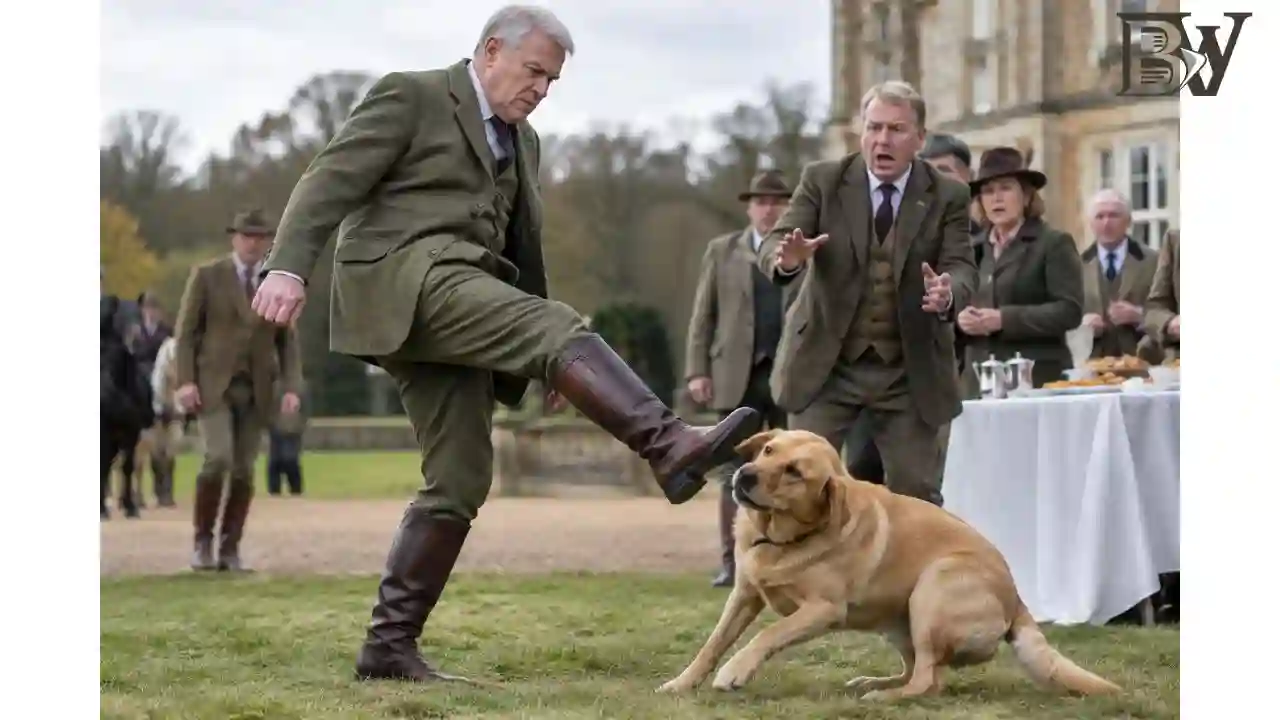
Andrew Mountbatten-Windsor Allegedly Kicked His Dog During a Royal Gathering: What the Book Claims
A new allegation concerning Andrew Mountbatten-Windsor has drawn renewed attention to the former royal’s conduct. According to an account published in the updated edition of royal biographer Andrew Lownie’s book titled The Rise and Fall of the House of York, Mountbatten-Windsor allegedly kicked one of his dogs during a shooting weekend at Sandringham. The reported incident has attracted particular attention because it allegedly happened in front of other people and was followed by a direct confrontation with a guest.
The allegation should be treated as such rather than as an established fact. The claim comes from Lownie’s updated biography and has subsequently been discussed in media coverage. No independent official record has been publicly presented to establish the incident as proven. That distinction is important when evaluating a serious accusation involving a public figure.
Who Is Andrew Mountbatten-Windsor?
Andrew Mountbatten-Windsor is the former Duke of York and a member of the British royal family who has remained the subject of intense public and media scrutiny for years. His public standing changed significantly following a series of controversies surrounding his conduct and associations, eventually leaving him with a substantially reduced role in public royal life.
That background helps explain why a fresh allegation can quickly attract widespread interest. Reports involving Mountbatten-Windsor are frequently interpreted in the context of previous controversies, meaning newly published claims can receive considerable attention. Nevertheless, each allegation needs to be considered on its own evidence rather than automatically being treated as confirmation of unrelated accusations.
The dog allegation appeared as part of additional material in Lownie’s updated book. It was not presented as the result of a court judgment or an official animal-welfare investigation, but rather as an account included in the biography.
What Happened During the Royal Gathering?
The reported incident allegedly took place during a pheasant-shooting weekend at Sandringham. According to the account described in Lownie’s book, members of the shooting party stopped for a mid-morning break where soup and sausage rolls were being served.
Mountbatten-Windsor was reportedly standing with one of his Labradors when the dog took a sausage roll from a guest’s hand. The guest reportedly found the moment amusing. The account then claims that Mountbatten-Windsor reacted angrily and allegedly kicked the Labrador in the head.
That alleged action is the central part of the controversy. Reports describing the book say the dog was left whimpering on the ground following the alleged incident. Because the information originates from a published account rather than an independently established official finding, it remains important to identify the claim as an allegation.
The Alleged Confrontation
The story reportedly did not end with the alleged encounter involving the dog. According to the account, the guest confronted Mountbatten-Windsor and objected strongly to the alleged treatment of the Labrador.
The confrontation was reportedly heated, with the guest criticizing Andrew’s behavior and expressing the view that the animal had been treated cruelly. Mountbatten-Windsor was reportedly angered by the challenge and objected to the guest criticizing how he treated his own dogs.
The reported exchange has added to public interest because it portrays the alleged incident as something witnessed directly by other people rather than an accusation made without any connection to a particular gathering.
Where Did the Allegation Come From?
The allegation comes from Andrew Lownie’s book Entitled: The Rise and Fall of the House of York. The biography examines Andrew’s public life, personal relationships and controversies surrounding his years as a senior member of the royal family.
The updated edition contains additional material concerning the former royal, including the reported incident involving the Labrador. The book has therefore become the primary source from which the allegation has been discussed publicly.
That distinction matters when considering the reliability and status of the claim. A biography can report testimony, recollections and information from people connected with an event, but inclusion in a book does not automatically transform an allegation into an independently verified fact.
Was the Alleged Incident Independently Confirmed?
There is an important distinction between the publication of the allegation and independent confirmation of what allegedly happened. The account has been reported in connection with Lownie’s book, but publicly available coverage does not establish that an official investigation independently confirmed every detail.
The allegation therefore remains a reported claim. Readers may consider the source, circumstances and reported witnesses when assessing it, but they should avoid presenting the incident as conclusively proven.
Careful language is especially important in stories involving accusations of animal cruelty. Terms such as “allegedly,” “according to the book,” and “the account claims” help distinguish reported information from established findings.
Why the Story Has Attracted Attention
Animal welfare allegations involving prominent personalities often generate strong emotional responses. When the individual involved is connected to the British royal family, the story can attract even greater interest because royal behavior is already subject to intense public scrutiny.
The alleged incident also took place at Sandringham, a location strongly associated with the royal family and its traditions. The combination of a royal setting, an alleged confrontation and an accusation involving a dog has made the account particularly attention-grabbing.
At the same time, the story has appeared within a broader wave of reporting about new claims concerning Andrew Mountbatten-Windsor. That broader context has contributed to renewed media interest in material contained in the updated biography.
The Wider Controversies Surrounding Andrew Mountbatten-Windsor
Andrew Mountbatten-Windsor has faced extensive public scrutiny over several controversies during and after his time as a working member of the royal family. Those controversies have had a lasting effect on the way new reports about him are received by the public.
However, previous controversies should not automatically be used as evidence that a new accusation is true. A responsible examination of the dog allegation requires separating it from unrelated claims and considering the specific evidence offered for this particular account.
The updated biography presents the incident as another detail concerning Andrew’s private behavior, but readers should still distinguish between allegations, reported recollections and independently established facts.
Andrew Mountbatten-Windsor and His Dogs
Dogs have long been associated with British royal life, with pets frequently appearing in photographs, family stories and royal traditions. That familiar relationship between the royal family and animals makes an allegation involving a dog particularly striking.
The account described in the book concerns a specific Labrador and a specific reported incident at Sandringham. It does not, on its own, establish a general pattern of behavior toward animals.
Making broader claims about Mountbatten-Windsor’s relationship with dogs would therefore go beyond what the allegation itself demonstrates. The available account should be considered on its own terms.
Allegation vs. Fact: What Readers Should Know
The most important issue surrounding the story is the difference between what has been reported and what has been independently established.
The reported allegation is that Andrew Mountbatten-Windsor kicked a Labrador in the head after the dog took a sausage roll from a guest during a pheasant-shooting gathering at Sandringham. The account was included in Andrew Lownie’s updated biography and subsequently attracted media attention.
What remains less clear is the extent of independent corroboration. Publicly available information does not establish the incident through an official investigation, court finding or other public record that conclusively verifies every element of the account.
That does not prove the allegation false, nor does publication of the allegation prove it true. It means the most accurate way to describe the story is as a claim reported in a biography.
This distinction is especially important in online publishing. Headlines can easily make allegations appear definitive, but credible reporting requires the underlying evidence and source to be represented accurately.
Conclusion
The controversy surrounding the claim that Andrew Mountbatten-Windsor allegedly kicked his dog during a royal gathering stems from material in Andrew Lownie’s updated edition of Entitled: The Rise and Fall of the House of York. According to the account, the reported incident occurred at Sandringham during a pheasant-shooting weekend after a Labrador took a sausage roll from a guest.
The guest reportedly confronted Mountbatten-Windsor over the alleged treatment of the dog, adding another dramatic element to the story. The allegation has attracted attention because of the royal setting, the nature of the accusation and Andrew’s already intense public profile.
At the same time, the claim should remain clearly identified as an allegation. The available public information does not establish it as a proven fact through an official finding. Readers seeking to understand the story should therefore consider both the source of the accusation and the limits of the available evidence.